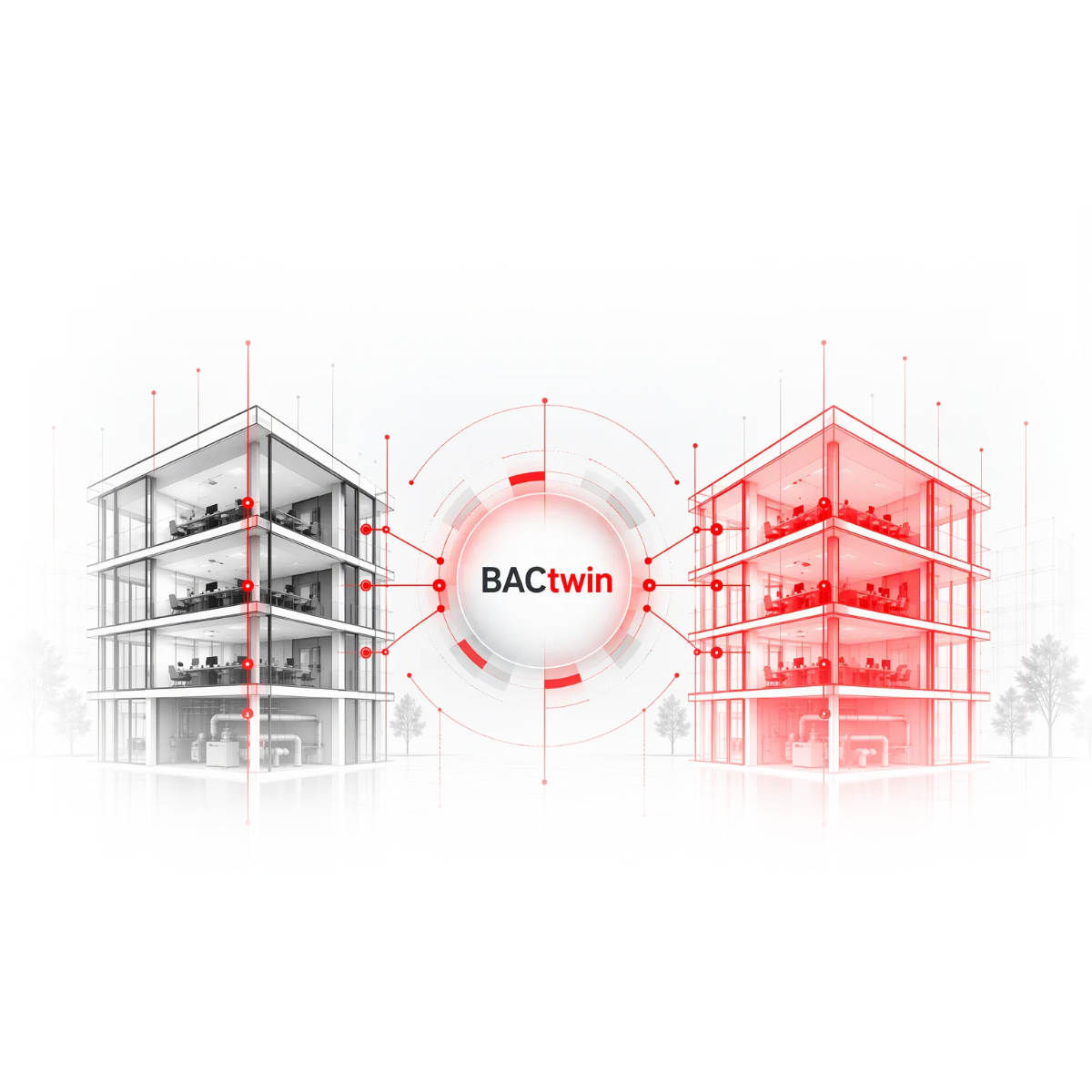
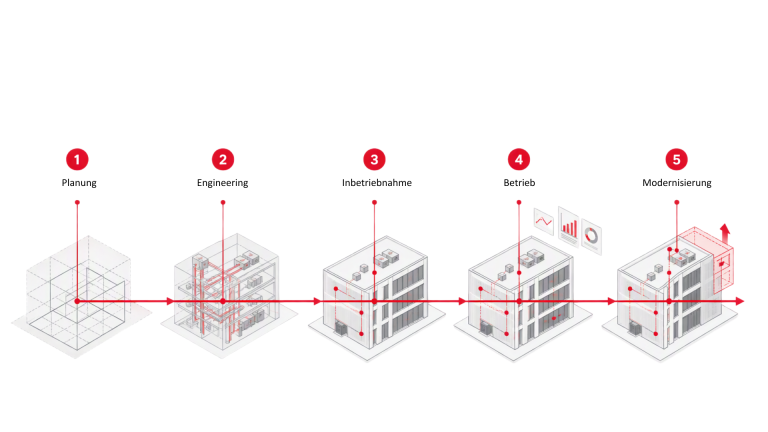
BACtwin supports a standardised digital description of building automation systems. Based on the client’s specifications, technical systems, functions and data points can be described in a structured manner and utilised consistently throughout the entire life cycle – from planning, through engineering and commissioning, right through to ongoing operation.
Whilst BACnet ensures standardised communication between automation systems, BACtwin complements this by providing a uniform structure and meaning for the data generated. This makes it easier to understand, categorise and reuse information across systems in the long term.
The AMEV’s BACtwin recommendation provides guidance on the structured description and modelling of these aspects. BACtwin can thus serve as a link between building automation, documentation, monitoring, facility management, BIM (Building Information Modelling) and digital twins.
The digitalisation of buildings requires far more than just reliable communication between devices and systems. It is crucial that information about technical installations, functions and data points is clearly described, structured and remains usable throughout a building’s entire life cycle. This is precisely where BACtwin comes in.
Even at an early stage of the project, starting with the client’s specifications and requirements (PH0), BACtwin can be used as the basis for a standardised and structured description of the building automation system. This information structure can then be carried forward through the planning, engineering and commissioning phases, right through to operation, monitoring and future expansions.
The AMEV recommendation, BACtwin, provides guidance on how systems, functions and data points can be described and structured in a consistent manner. Thanks to this consistent structure, information does not need to be re-entered or manually transferred at every stage of the project. Instead, a consistent information base is created which can be used by various systems, software solutions and project stakeholders throughout the entire life cycle. This can reduce engineering effort, minimise sources of error and improve data quality in the long term.
At the same time, BACtwin lays an important foundation for the further use of building information, for example in Building Information Modelling (BIM), digital twins, energy management, facility management and data-driven analyses. Information is thus not only made available for building automation, but can be maintained in a structured manner – from the client’s initial requirements right through to day-to-day operations – and utilised in the long term.
SE provides high-performance products and software tools that support installers and system integrators in carrying out a structured and efficient BACtwin implementation in existing buildings and new developments. In doing so, SE actively contributes its practical experience to the further development of the system and is involved in the core team responsible for defining the JSON-based exchange format.
With ixWork, BACtwin is natively integrated into the engineering process. From BAS project planning and data point definition right through to commissioning, information can be generated, managed and reused throughout the entire process. BACtwin-BACnet templates can be prepared using an integrated template editor and made directly available for implementation. This facilitates consistent implementation and reduces the amount of manual work involved in engineering.
In this way, SE supports a seamless workflow in which BACtwin structures do not need to be added retrospectively, but can instead be taken into account right from the project planning stage and consistently maintained right through to commissioning.
In many projects, information is recorded, transferred or updated manually on multiple occasions. This leads to inconsistencies, misunderstandings and additional work. A standardised, recommended data structure provides a common basis for all those involved in the project.
This is precisely where BACtwin comes in: how, for example, should a heating circuit comprising a valve, pump and sensors be represented in BACnet so that designers, installers, system integrators and operators all understand the structure in the same way? BACtwin provides specific recommendations on how to describe and structure the information in a standardised manner.
This enables data to be used consistently throughout the entire building life cycle, from the client’s specifications and the design phase, through engineering and commissioning, to operation and subsequent modernisation.
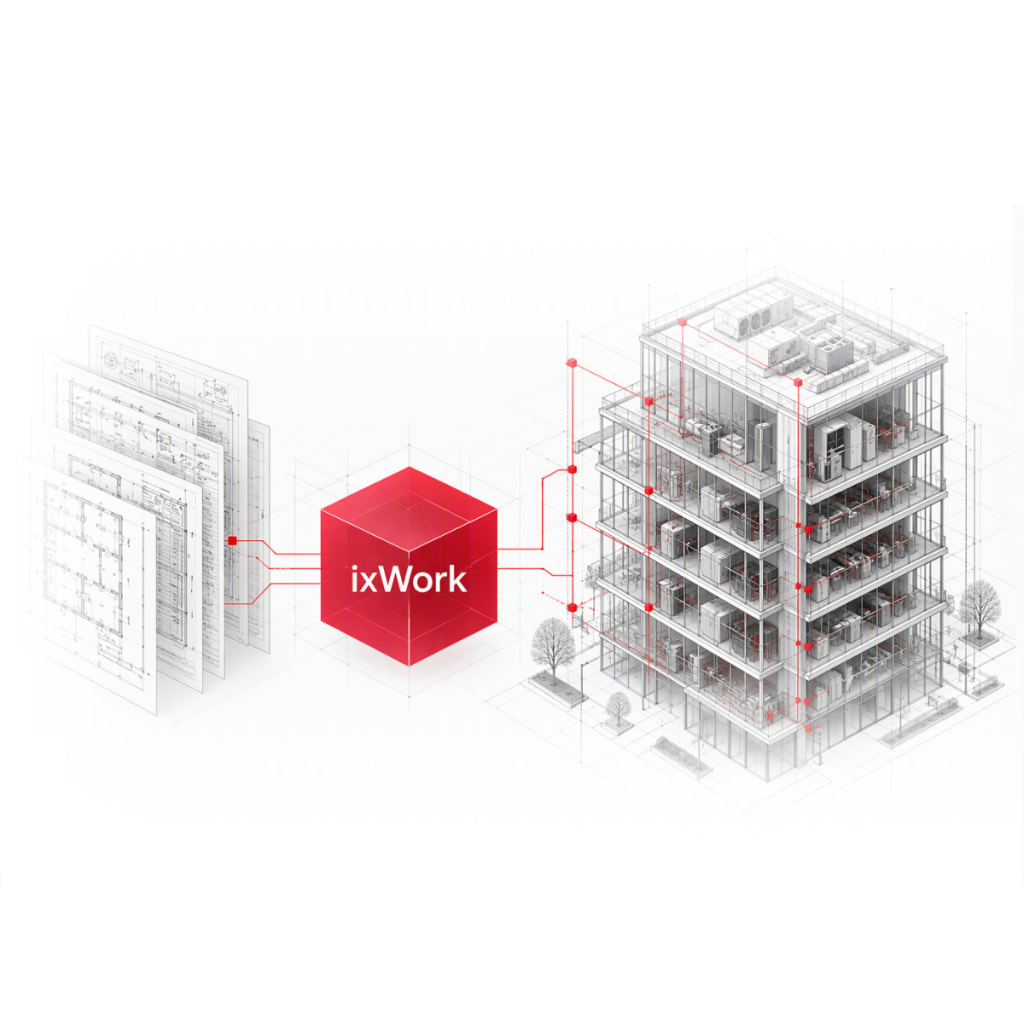
Depending on the scope of the project, creating a BACtwin structure can be complex and time-consuming. With ixWork, SE-Elektronic offers a practical solution: existing design documents and project files can be imported directly and processed further. The information they contain is automatically transferred and prepared for the BACtwin structure.
As BACtwin is natively supported as part of the project, the defined relationships between systems, functions and data objects can be utilised directly. On this basis, the visualisation of the data objects in the web configuration can also be generated automatically. The existing structure therefore serves not only engineering purposes, but also directly facilitates the clear presentation and subsequent use of the information.
This means that the structure does not need to be rebuilt from scratch or maintained multiple times for different applications. This saves time, reduces manual effort and improves data quality, from planning through to engineering, visualisation and commissioning.

Supports the common XML format

Existing information is automatically carried over

Without having to manually re-enter assets and data points
Standardised and structured data as a reliable basis

From planning to operation – reach your goals faster with ixWork
Consistently structured information reduces inconsistencies and provides a reliable data foundation for the entire building management process.
Reusable information shortens project durations and reduces engineering effort.
Clear data models facilitate testing, documentation and handover to operators.
Standardised data makes it easier to analyse technical systems and identify opportunities for optimisation.
BACtwin lays the groundwork for modern digital building models and data-driven operational optimisation.
Standardised building data forms the basis for efficient building automation, BIM projects, energy management and digital twins. With BACnet and solutions from SE-Elektronic, you can create a future-proof database for the entire life cycle of your buildings.